Showing posts with label sin. Show all posts

Sunday, December 21, 2014

From a Line of Sinners

As we begin the last week of Advent and the countdown to Christmas, in this post (originally from December 24, 2013), let's reflect on the significance of Christ choosing to count both the best and the worst of humanity among his ancestors.  Today's Gospel reading, Matthew's account of the genealogy of Our Lord (Mt 1:1-17) is packed with more than meets the eye


"For Jews demand signs and Greeks look for wisdom, but we proclaim Christ crucified, a stumbling block to Jews and foolishness to Gentiles, but those who are called, Jews and Greeks alike, Christ the power of God and the wisdom of God." (1 Corinthians: 22-24)

I once heard it said that, if you really want to know someone, you've got to know where they came from and where they're headed.  The only thing that could probably be added to that is the present.  Along with the past and future, you've got to know someone's here and now, to meet them in their present life circumstances.  To really enter into relationship, in particular the type of caritas or agape relationship that God calls us to, and that we are called to seek out in each other, there has to be a genuine interest in the heart, in seeking out what influences push and pull it, and a willingness to enter into the broken and ugly pieces that we all carry around with us.

This is one way I've been led to approach the the question, "Who is Christ?  Who is this man that we claim worship as God?"    We could spend an eternity exploring and reflecting on the person of the God-man, of mystery of Emmanuel (God with us) and, by his grace, one day we will...for eternity. After all, isn't that what heaven is about?  Isn't it about being immersed in the power of divine relationship, of perfect love incarnate, and of the unlimited truth, goodness, and beauty that we only catch fleeting and limited glimpses of during our walk in this valley of tears?  Isn't it living with full consciouness and perfect knowledge of the One who not only created us, but who loved us with such self-abandon that he lowered himself to give up his life, choosing mercy beyond justice so as not to leave us in the squalor and suffering of our sin?  If not I'm not sure that I would want any other idea of heaven, or any other God, at least for eternity.

As for there here and now, I'll  narrow it to the question of the Who of The Five W's: the person of Christ as One who came to enter into relationship with us and literally save us from ourselves, in the past, present, and future.  He took on a human identity without giving up his divinity so that we might know that, despite our frail humanity, we are no longer bound by the pain of our past, by our present circumstances, or by the future that we so often look into with both hope and fear because we are so powerless to control it.  By entering into our humanity, he literally bent time, condescending (lowering himself) to at once dwell with us as the fulfillment of the hope of our ancestors in faith, as leader and our constant companion on our life's journey, and to raise us to the intended dignity and show us the glorious destiny he has won for us and destined us for by his passion, death, and resurrection.

Past
In the December 16th reflection of Watch for the Light: Readings for Advent and Christmas, entitled Genealogy and Grace, Gail Godwin offers a reflection on Matthew's purpose in beginning his Gospel by recounting the genealogy of Christ (Matthew 1:1-17), and particularly his inclusion of people who were "...not necessarily the noblest or most deserving person[s] to carry out divine purposes."
For reasons unknown to us, God may select the Judahs who sell their brothers into slavery, the Jacobs who cheat their way to first place, the Davids who steal wives and murder rivals - but also compose profound and beautiful psalms of praise.
And what about the five women Matthew choses to include? Not a mention of Sarah or Rebekah or Rachel, the upstanding patriarchal wives of Israel.  Instead Tamar, a Cananite, who disguised herself as a prostitute and seduced her father-in-law Judah to get a son out of him.  And Rahab, another Cananite and a real prostitute this time.  And Ruth the Moabite, another outsider.  And Bathsheba, mother of Solomon, is named only as the wife of Uriah, whom King David had killed so he could marry her himself.  Every one of these women used as God's instrument had scandal or aspersion attached to her-as does the fifth and final woman named in the genealogy: Mary, the mother of Jesus, with her unconventional pregnancy.
Matthew's intent in highlighting these women is to make the point that Christ, who as God was able to plan and choose his own lineage, did so in a way that made a bold and profound statement: that he desired to come to us not with the appearance and glory of God (as he is and will return), but in the humility of a 100% human being with very much imperfect ancestors.  In doing so, took on our sin not by sinning himself, but by assuming the sins of the past and all time onto himself. At the same time, in choosing to singularly exempt Mary from this stain of sin, he reversed our trajectory from darkness and sin to light and redemption and prepared for himself a perfect flesh-and-blood tabernacle from which to enter into the world.  Christ chose to enter the nastiness, pain, and fear, and death of a fallen humanity rather than abandon us to the fate we deserved.  He chose love and mercy beyond justice.  Only God could plan that kind of entrance.

And that is where we are arrive at Christmas.  Light has pierced the darkness.  God with us has come into the world, to take the burden of our fallen and broken state onto himself, beginning with the past, because only he as God is strong enough and wise enough to rid us of it once and for all.

+AMDG+

Sunday, December 7, 2014

Cleaning House

Do you or have you ever met someone who enjoys cleaning?  I mean really enjoys it, as if there were nothing else the person could see themselves doing more than cleaning.  When someone tells me they do, it automatically raises the question, at least in my head:  Really?  Do you really enjoy it, for it's own sake?  Don't get me wrong, I like love a clean room, clean house, clean garage, clean car, clean clothes...you name it.  There's just a deep-down, simple, good feeling that comes from having things sorted, straightened, unsoiled, and fresh, especially when it has been returned from the alternative state.  There's just something in the normal, rational, god-fearing human soul that gravitates toward things being that way.  There really is more truth to the old adage, "Cleanliness is next to godliness" than meets the eye.

But, cleanliness is an end state.  The process to get there, of expending time and sweat to put things back the way we wished they had been all along, isn't nearly as fun as being there.  On second thought, it just isn't fun period. Not at all.  For me at least, it usually comes more out of necessity than of choice, and has to be disciplined and enforced (parents, you know how this goes, right?).  I can almost always think of at least a half dozen other things I'd rather be doing, or places I'd rather be, like reading, taking a nice long run, you name it.

One of the greatest motivators to just get it done when it comes to cleaning is the arrival of guests.  Knowing that they are coming to visit suddenly gives us a sort of hyper awareness of everything in the house that isn't absolutely immaculate.  Those dust bunnies that have been hanging out under the bed for a few weeks now?   Odds are the guests will never, ever lift up your covers to see them, but you know they're there and with just the the thought of it, they might as well be screaming out loud enough for the neighborhood to hear, "Clean me.  Clean me!"


Back the the "unfunness" of the task at hand (can you tell how much I haven't felts like cleaning this weekend?)... Heck, we here in American despise cleaning so much--and our time doing anything but is so precious to us--that we even outsource it.   We have an entire industry built around providing cleaning services, both at home and in the workplace.  And even when we don't pay directly for someone else to do it, we consult with others about how to clean up because we don't even have time to think  and plan how to do it.  Sometimes we pay big bucks for this too, for someone to think for us and tell us what needs to be cleaned and how we should do it.

Not only that, but once the end state of having everything clean and in its proper place is attained, it's so easily lost.  I mean it's just downright demoralizing, isn't it?  I don't know how many times I have spent the better part of a weekend cleaning our garage, organized everything, sweeping, re-arranging shelves, and re-establishing a system for maintaining that hard-earned end state, all the while thinking, "This time it will work.  It will stay clean, everything that's used will put back in it's place, I will never have to spend hours cleaning again, and the life of garage storage will go on happily ever after."

Mmm hmm...Riiiight.  Somehow it just doesn't work out that way, and in a matter of days, weeks, or months later, it seems like we are back to square one and needing another round of neatness intervention.  I think we all (sane people anyway) really do like to have things as they should be.  It's the process of getting there that's not fun, and keeping things that way can seem downright impossible.


And so it is with the spiritual life.

The Church, recognizing that we need a periodic reminder to set aside time to sweep and straighten the "house" of our souls, gives us Advent season as a dedicated time to prepare for the arrival of the most important house guest, the King of all creation.

The readings for today, the Second Sunday of Advent, begin with one of my favorite (and perhaps one of the most well known) verses from Old Testament scripture: the prophet Isaiah's message of hope and promise of salvation that flows from the old covenant into the new.  Through the prophet, God speaks to remind us both of our need to diligently and expeditiously "prepare the way of the Lord," to get about the nitty gritty work of cleaning house, so to speak, in our souls, all the while lifting our eyes and hearts to the hope of the future kingdom.

A voice proclaims:
In the wilderness prepare the way of the LORD!
Make straight in the wasteland a highway for our God!

Every valley shall be lifted up,
every mountain and hill made low;
The rugged land shall be a plain,
the rough country, a broad valley.

Then the glory of the LORD shall be revealed,
and all flesh shall see it together;
for the mouth of the LORD has spoken.

A voice says, “Proclaim!”
I answer, “What shall I proclaim?”
“All flesh is grass,
and all their loyalty like the flower of the field.

The grass withers, the flower wilts,
when the breath of the LORD blows upon it.”
“Yes, the people is grass!

The grass withers, the flower wilts,
but the word of our God stands forever.”

Go up onto a high mountain,
Zion, herald of good news!
Cry out at the top of your voice,
Jerusalem, herald of good news!
Cry out, do not fear!
Say to the cities of Judah:
Here is your God!

Here comes with power
the Lord GOD,
who rules by his strong arm;
Here is his reward with him,
his recompense before him.

Like a shepherd he feeds his flock;
in his arms he gathers the lambs,
Carrying them in his bosom,
leading the ewes with care.
- Isaiah 40:3-11 (NAB)

With these words, the prophet points us forward through the trials, difficulties, and flat out spiritual warfare--with our own personal sins and the societal evil that we seem so powerless to cure--to look toward the fullness of time, when the "space" of creation, dragged down through history by man's sin and disobedience, will be restored to its immaculate end, to our promised salvation and the fullness of God's kingdom, as St Peter writes in the conclusion of the second reading:

But according to his promise
we await new heavens and a new earth
in which righteousness dwells.
Therefore, beloved, since you await these things,
be eager to be found without spot or blemish before him, at peace.

-2 Pt 3:13-14

As I mentioned in a previous post from 2/14/2010, Now Comes the Best Part, the most beautiful and concrete way to take up this spiritual house cleaning, and to get rid of the sin that mires and clutters our souls, is to make a good confession.   It is often a very difficult and laborious experience to have to voice our failings and shortcomings, but as with all cleaning work, it must be done, and habit makes it easier.  And the result after this cleaning is complete is joy and encouragement as our soul is swept clean.  So, during this Advent season, let us hasten to make way in our own hearts for the coming of He who seeks to dwell there, and by doing so bring a little light, fresh air, and clarity, to our own little part of his kingdom.

+AMDG+

Sunday, December 1, 2013

It's Advent: Don't Trust Your Feelings - NCRegister


Advent begins today, the time of anticipation and "mak[ing] straight in the desert a highway for our God." (Is. 40:3).  Time for some deeper spiritual examination, confession and pulling out all the old stumps of our pet sins and spiritual weaknesses that we let hang around because we're just too lazy (I use that pointed word for my own sake) to rout them out and really smooth the plain for Christ to come into our lives--and the world through us--and do his work.

This article reminded me of that, and one particular hit me like a ton of bricks, since I've been trying to moderate my diet better, and fast for specific intentions:


Do you control your appetites or vice versa? You want to be moderate in what you eat or drink. You occasionally even make a significant sacrifice in this area. But does it happen even more often that you rationalize and break your own rule? Look at the facts: How many sweets or sodas or glasses of wine did you consume yesterday? This week?


I guess it's time to get on board with Yoda's "Do or do not, there is no try."

Read more: It's Advent: Don't Trust Your Feelings - NCRegister

Saturday, August 20, 2011

Values in A Time of Upheaval Part Three: Who Needs Guilt?


In Chapter Five of Values in a Time of Upheaval, entitled "If You Want Peace..." the Holy Father begins by introducing two opposing concepts of morality, and the journey that brought him to the Christian understanding of how our conscience must function to create peace within our souls and peace within the world.

Morality of Conscience

The first view of morality holds that conscience is the highest rule, that the fundamental system of accountability in safeguarding human freedom lies in following our own conscience, even when it leads us to oppose authority.  According to this view, conscience ultimately has the last word.  Some even take this so far as to believe that a person cannot go wrong by following their conscience, that conscience is infallible.

Obviously there is some truth to this--we are accountable first and foremost to ourselves--but to argue that the ultimate accountability is to our conscience is just plain wrong.  Our whole person, including our conscience, is subject to the distorting effects of sin.  This is dangerous because it ultimately only leads us back to into our fallen, broken selves, and closes any window that allows us to see the "Other," the Truth that unifies all things.  In that system, the truth about anything becomes subjective and individual instead of objective and universal.
"One must always follow a clear verdict of conscience....But it is quite a different matter to assume that the verdict of conscience...is always correct, i.e. infallible--for if that were so, it would mean that there is no truth, at least in matters of morality and religion, which are the foundations of our very existence...there would exist only the truth of the subject."
Isn't this view, what Pope Benedict refers to as" the idea of conscience found in liberalism," precisely what we see prevailing in our world today? This is exactly what leads to the phenomenon the Holy Father has referred to as the "dictatorship of relativism."  On the surface, its initial promise, that it would "enable human beings to live together" in peace, without our conflicting views rubbing up against each other, seems tantalizing.  But this quickly comes to an end where it meets the reality of the darkness that remains in the human soul.  We have seen examples of this time after time in history, and what seems to be almost weekly in the news headlines, of the terrible consequences when this darkness festers and erupts into the world in violent, often murderous, action.  If this darkness is not exposed (often painfully) to the outside light, it remains with nothing to quell it, twisting conscience more and more until the conscience itself becomes unrecognizable. Under this idea, even the worst mass murderer would be justified in his actions if, in the deepest part of himself, he believed that what he was doing was right.

So what is the antidote?  In one word: guilt. In a few more words, a properly formed conscience that guilt leads us to recognize we need.

Morality of Authority


This opposing view of morality of conscience argues that, basically, our conscience is fallible and needs help from outside (or, above).  The conscience can be led into error and distorted, and so it is not reliable as a final source of moral authority.  It forces us to look outside ourselves for another, authoritative source.  When we allow the darkness and sin within us to be exposed to that outside source of light, it creates a feeling that is painful, often deeply so.  It's like a cancer being exposed to radiation treatment, but in this case the "radiation" is Divine.  The pain that comes each time the cancer festers and is exposed to light is guilt.  Guilt comes when we recognize the difference between who we are and who we ought to be, and destroys any false notion of the conscience as absolute.  The Holy Father reflects upon this idea of guilt as he first came upon it in an essay by German psychologist Albert Gorres:
"The guilt feeling that shatters a conscience's false claim and the criticism made by my conscience of my self-satisfied existence are signals that we need just as much as we need the physical pain that lets us know our normal vital functions have been disturbed.  One who is no longer capable of seeing his own guilt is psychologically ill..."
Guilt is what sounds the alarm bells that something within us has violated our conscience, but more importantly has violated the objective Truth that conscience is designed to remind us of.  Guilt gives us the ability to look inwardly and realize that, for whatever reason, we have closed the window on that cleansing light, even if momentarily, and allowed the cancerous growth of sin to start accumulating again.  The Pope continues, "Jesus can work effectively among sinners because they have not become inaccessible behind the screen of an erring conscience, which would put them out of reach of the changes that God awaits from them--and from us." This is why, in the parable of the Pharisee and the tax collector (Luke 18:9-14), "the tax collector with all his undisputed sins is more righteous in the eyes of God than the Pharisee with all his genuinely good deeds."


The world today, which in so very many places subscribes to the morality of conscience, would have us believe that guilt is a bad thing, something to be done away with. "We have lost sight of truth as such, the absolute, the basic point of reference of our thought," the Holy Father says,  "and this is why...there is no longer any 'up' or 'down.'" There are no directions in a world that lacks fixed points for measuring."  In reality, guilt is absolutely necessary for our proper spiritual and psychological functioning.   We need it to let us know when the compass of our conscience is not working as it should, or that, if it is properly formed, we have disregarded it and allowed ourselves to be deceived that East, West, or South are North.

This all leads to the question of where we can turn to make sure that our conscience works the way it should.  To what--or, to who--can we can look to find the source of cleansing and healing that the Psalmist begs for in Psalm 19:12: "But who can discern his errors? Clear thou me from hidden faults"?  That, and the "working examples" of the saints, whose lives are lived and whose example lives on for us as benchmarks of properly formed conscience, will have to wait for another post.

In the meantime, please pray for the Holy Father, that he will continue to be blessed with grace and strength as he leads the Church to remain a beacon of light in a world of darkness.


+AMDG+

Monday, August 15, 2011

"If You Want Peace..." A Primer

This past week in Britain, and in several less-reported instances in locations across the United States, we have seen the outbreak of violence from a generation of teens and twenty-somethings who, whatever their motivation, had no excuse for wreaking the violence and destruction that they did.  As I sat, browsing news article after news article, each offering a different slant on the unfolding situation and playing the "blame game," I couldn't help but try to probe each perspective looking for a common thread.  Surely, there must be something to explain why all of this pent-up (fill in the motivation) was coming to a head and finding its expression in such senseless violence against fellow citizens, their property, and their livelihoods.

It did not take much longer to figure out what drove them, or better, what did not restrain them from lashing out: a sheer, unadulterated lack of conscience.  Max Hastings put it perfectly in his August 10 U.K. Daily Mail article, "Years of liberal dogma have spawned a generation of amoral, uneducated, welfare dependent, brutalised youngsters," when he said:

"They are essentially wild beasts. I use that phrase advisedly, because it seems appropriate to young people bereft of the discipline that might make them employable; of the conscience that distinguishes between right and wrong.
They respond only to instinctive animal impulses — to eat and drink, have sex, seize or destroy the accessible property of others."
Where are these rioters' consciences?  Did it not cross one of their minds that acting this way--invoking chaos and destruction--is evil no matter what the supposed justification?  Had they no shame?


Sadly, for many of them, the short answer is no. Growing up in an entitlement, me-me-me, I-I-I, now-now-now culture, many--even those who did not want for anything and had promising futures--either never had theirs properly formed to begin with or, worse, checked them at the door when they decided to step foot into the street.

This topic of conscience and the questions that follow from it are exactly what the Holy Father tackles in Chaper 5 of Values in a Time of Upheaval, an essay entitled If You Want Peace...: Conscience and Truth.

What is our conscience?

How does it function?

What is its purpose, both within our individual self and in the whole of human society?


What is our responsibility to obey and to form our conscience?

Look later this week for an unfolding of the Pope's discussion as he explores and probes the answers to these questions and more in If You Want Peace.

Until then...

+ AMDG+

Sunday, November 14, 2010

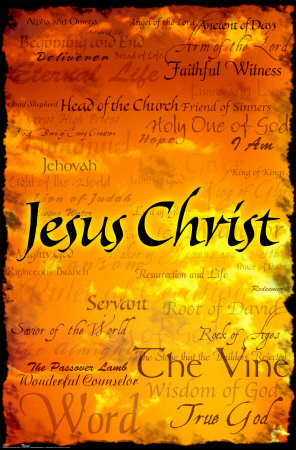
What's In A Name?

"And being found in human form he humbled himself and became obedient unto death, even death on a cross. Therefore God has exalted him and bestowed on him the name which is above every other name, that at the name of Jesus every knee should bow, in heaven and on earth and under the earth, and every tongue confess that Jesus Christ is Lord, to the glory of God the Father."                                              -Philippians 2:8-10

I cringe whenever I hear the Lord's name taken in vain, especially when it's used in a negative or derisive manner.  It literally causes me physical pain, particularly on the occasion when it is I who let his name slip from my lips without respect and reverence.  The funny thing is, several years ago, if anyone else had told me they had a physical reaction, I would have been very likely to--at best--give a smirk of dismissal.  Sure, I knew that it was a Commandment, but certainly God would not strike me down for the simple act of letting an utterance carelessly slip from my lips, would he?

The answer is no, but for a very different reason than I used to think, but I'll get back to that in a second.

First, let's take a moment to think about the implication of what St. Paul described in the above passage from his Letter to the Philippians.  Imagine a name so powerful that every creature in heaven, on earth, and under the earth--indeed all of creation itself should bow at its mere utterance.  For all eternity, all of creation, led by the angels and the martyrs, falls down in worship before his throne, "Worthy is the Lamb who was slain, to receive power and wealth and wisdom and might and honor and glory and blessing!...To him who sits upon the throne and to the Lamb be blessing and honor and glory and might for ever and ever!" (Rev 5:12-13).  The wind and sea obey his commands (cf. Matthew 8:27), and even the demons who know their days to roam the earth are numbered cower in fear at the recognition of him (cf. Matthew 8:28-34).

The power of his name is not limited to situations of such large consequence.  Try speaking his name in the context of an everyday conversation.  Either it will cause an instantaneous bond, warmly and excitedly received (by fellow Christians), received with  inquisitiveness (by those seeking the Truth but who might not know that he is a person, Jesus Christ), or you will be flat out rejected and dismissed (by unbelievers).  The bottom line is that his name is divisive.  It knocks people out of their comfort zone.  Jesus came to forgive, surely, but also to eliminate the "middle ground."  It is so easy to forget that that the middle ground, in the scheme of eternity, will not exist for very much longer.  Our response to and use of the power of his name will leave us either in the first group or the last.

His name is also incredibly powerful with interior struggles against temptation and evil.  Try speaking and meditating on his name--only his name--when you encounter them.  Set your mental and spiritual focus on him, place yourself at the foot of his cross, and before very long the demons will not be able to stand it.  They cannot stand its power will flee in fear just as quickly as they came.

Back to the reason God will not strike us down.  We are not struck down because of the merciful power--or better the infinitely powerful mercy--of his name.  It is so easy to forget that even the slightest sin merits us being stricken and condemned.   But he, the name, stepped down into our time and took that death and condemnation on himself.  Because he is man, he could suffer for us what we deserved.  Because he is God, he could take it away our offense as if it had never existed.  To carry his mercy forward in time until he comes in glory at its end, he gave us the Sacraments, especially Reconciliation and the Eucharist, as concrete, tangible communicators of that grace and mercy.

So, when I hear that power of his name--the power to create, bless, unify his body, divide the wheat from chaff, forgive sins, and deliver our prayers to the Father--used so carelessly and nonchalantly, it hurts.  Let us pray for the grace that, for love of his heart that bleeds for us, it will hurt all the more.

Benedictus qui venit in nomine domini.

+AMDG+

Thursday, October 21, 2010

Thank You Archbishop Burke!

Finally, some words of crystal clarity, thrown down like a gauntlet by one of the highest officials in Rome (who, ironically, during his time as the Archbishop of St. Louis, was much-derided by Catholics of the more...how shall I say this...liberal bent). As the sitting Prefect of the Supreme Tribunal of the Apostolic Signatura, Archbishop Burke (Cardinal-designate Burke as of yesterday, to be installed November 20) holds the highest judicial authority in the Church after the Holy Father himself.  He delivered a keynote address to a major congress in Rome last week hosted by Human Life International, in which he derided so called "cafeteria Catholics" who give into the temptation "to view the magisterium in relation to his individualism and self-pursuit.He held nothing back, calling out first and foremost bishops who have given into such temptation and left their flock to be scattered by the wolves of a society that teaches us to "believe what is convenient and to reject what is difficult for us or which challenges us."


He also left no doubt about the hypocrisy of so-called Catholic politicians and others who publicly disobey and refuse to live according to the magisterium in every day life:


"We find self-professed Catholics, for example, who sustain and support the right of a woman to procure the death of the infant in her womb, or the right of two persons of the same sex to the recognition which the State gives to a man and a woman who have entered into marriage. It is not possible to be a practicing Catholic and to conduct oneself publicly in this manner.”


He lamented the scandal that it as wrought, "that many have become confused about 'the most basic truths,' namely the inviolable dignity of innocent human life from conception until natural death, and marriage of one man and one woman 'as the first and irreplaceable' source of life and society."


We have been looking for these words from Rome for a long time, since we are not hearing them from many of our own pulpits.  Even better that they should come from an American.


Read the article: A Plea for Life, Truth, and Obedience (Zenit.org)

+AMDG+

Sunday, July 4, 2010

Catechism on Sin by Saint John Vianney

In a previous post, The Reality and Insanity of Sin, I commented on the necessity of "owning up" to our sins before the acts of repentance and redemption can take place.  In preparing for a scripture study this past week, on Chapter 3 of Father Larry Richards' just-released book, Be A Man (more on that in later posts), I was pointed to a powerful reflection on the stark reality and destructiveness of our choice to sin by renowned priest and confessor, Saint John Vianney:

Catechism on Sin
by Saint John Vianney

Sin is the executioner of the good God, and the assassin of the soul. It snatches us away from Heaven to precipitate us into Hell. And we love it! What folly! If we thought seriously about it, we should have such a lively horror of sin that we could not commit it. O my children, how ungrateful we are! The good God wishes to make us happy; that is very certain; He gave us His Law for no other end. The Law of God is great; it is broad. King David said that he found his delight in it, and that it was a treasure more precious to him than the greatest riches. He said also that he walked at large, because he had sought after the Commandments of the Lord. The good God wishes, then, to make us happy, and we do not wish to be so. We turn away from Him, and give ourselves to the devil! We fly from our Friend, and we seek after our murderer! We commit sin; we plunge ourselves into the mire. Once sunk in this mire, we know not how to get out. If our fortune were in the case, we should soon find out how to get out of the difficulty; but because it only concerns our soul, we stay where we are.


We come to confession quite preoccupied with the shame that we shall feel. We accuse ourselves by steam. It is said that many confess, and few are converted. I believe it is so, my children, because few confess with tears of repentance. See, the misfortune is, that people do not reflect. If one said to those who work on Sundays, to a young person who had been dancing for two or three hours, to a man coming out of an alehouse drunk, "What have you been doing? You have been crucifying Our Lord!" they would be quite astonished, because they do not think of it. My children, if we thought of it, we should be seized with horror; it would be impossible for us to do evil. For what has the good God done to us that we should grieve Him thus, and put Him to death afresh -- Him, who has redeemed us from Hell? It would be well if all sinners, when they are going to their guilty pleasures, could, like Saint Peter, meet Our Lord on the way, who would say to them, "I am going to that place where thou art going thyself, to be there crucified afresh. " Perhaps that might make them reflect.


The saints understood how great an outrage sin is against God. Some of them passed their lives in weeping for their sins. Saint Peter wept all his life; he was still weeping at his death. Saint Bernard used to say, "Lord! Lord! it is I who fastened Thee to the Cross!" By sin we despise the good God, we crucify the good God! What a pity it is to lose our souls, which have cost Our Lord so many sufferings! What harm has Our Lord done us, that we should treat Him so? If the poor lost souls could come back to the earth! if they were in our place! Oh, how senseless we are! the good God calls us to Him, and we fly from Him! He wishes to make us happy, and we will not have His happiness. He commands us to love Him, and we five our hearts to the devil. We employ in ruining ourselves the time He fives us to save our souls. We make war upon Him with the means He gave us to serve Him.


When we offend the good God, if we were to look at our crucifix, we should hear Our Lord saying to us in the depths of our soul, "Wilt thou too, then, take the side of My enemies? Wilt thou crucify Me afresh?" Cast your eyes on Our Lord fastened to the Cross, and say to yourself, "That is what it cost my Saviour to repair the injury my sins have done to God!" A God coming down to earth to be the victim of our sins, a God suffering, a God dying, a God enduring every torment, because He would bear the weight of our crimes! At the sight of the Cross, let us understand the malice of sin, and the hatred we ought to feel for it. Let us enter into ourselves; let us see what we can do to make amends for our poor life.


"What a pity it is!" the good God will say to us at our death; "why hast thou offended Me -Me, who loved thee so much?" To offend the good God, who has never done us anything but good; to please the devil, who can never do us anything but evil! What folly! Is it not real folly to choose to make ourselves worthy of Hell by attaching ourselves to the devil. when we might taste the joys of Heaven, even in this life, by uniting ourselves to God by love? One cannot understand this folly; it cannot be enough lamented. Poor sinners seem as if they could not wait for the sentence which will condemn them to the society of the devils; they condemn themselves to it. There is a sort of foretaste in this life of Paradise, of Hell, and of Purgatory. Purgatory is in those souls that are not dead to themselves; Hell is in the heart of the impious; Paradise in that of the perfect, who are closely united to Our Lord.


He who lives in sin takes up the habits and the appearance of the beasts. The beast, which has not reason, knows nothing but its appetites. So the man who makes himself like the beasts loses his reason, and lets himself be guided by the inclinations of his body. He takes his pleasure in good eating and drinking, and in enjoying the vanities of the world, which pass away like the wind. I pity the poor wretches who run after that wind; they gain very little, they five a great deal for very little profit -- they five their eternity for the miserable smoke of the world.


My children, how sad it is! when a soul is in a state of sin, it may die in that state; and even now, whatever it can do is without merit before God. That is the reason why the devil is so pleased when a soul is in sin, and perseveres in it, because he thinks that it is working for him, and if it were to die he would have possession of it. When we are in sin, our soul is all diseased, all rotten; it is pitiful. The thought that the good God sees it ought to make it enter into itself. And then, what pleasure is there in sin? None at all. We have frightful dreams that the devil is carrying us away, that we are falling over precipices. Put yourself on good terms with God; have recourse to the Sacrament of Penance; you will sleep as quietly as an angel. You will be glad to waken in the night, to pray to God; you will have nothing but thanksgivings on your lips; you will rise I towards Heaven with great facility, as an eagle soars through the air.


See, my children, how sin degrades man; of an angel created to love God, it makes a demon who will curse Him for eternity. Ah! if Adam, our first father, had not sinned, and if we did not sin every day, how happy we should be! we should be as happy as the saints in Heaven. There would be no more unhappy people on the earth. Oh, how beautiful it would be! In fact, my children, it is sin that brings upon us all calamities, all scourges, war, famine, pestilence, earthquakes, fires, frost, hail, storms -- all that afflicts us, all that makes us miserable. See, my children, a person who is in a state of sin is always sad. Whatever he does, he is weary and disgusted with everything; while he who is at peace with God is always happy, always joyous. . . . Oh, beautiful life! Oh, beautiful death!


My children, we are afraid of death; I can well believe it. It is sin that makes us afraid of death; it is sin that renders death frightful, formidable; it is sin that terrifies the wicked at the hour of the fearful passage. Alas! O God! there is reason enough to be terrified, to think that one is accursed -- accursed of God! It makes one tremble. Accursed of God! and why? for what do men expose themselves to be accursed of God? For a blasphemy, for a bad thought, for a bottle of wine, for two minutes of pleasure! For two minutes of pleasure to lose God, one's soul, Heaven forever! We shall see going up to Heaven, in body and soul, that father, that mother, that sister, that neighbour, who were here with us, with whom we have lived, but whom we have not imitated; while we shall go down body and soul to burn in Hell. The devils will rush to overwhelm us. All the devils whose advice we followed will come to torment us.


My children, if you saw a man prepare a great pile of wood, heaping up fagots one upon another, and when you asked him what he was doing, he were to answer you, "I am preparing the fire that is to burn me, " what would you think? And if you saw this same man set fire to the pile, and when it was lighted throw himself upon it, what would you say? This is what we do when we commit sin. It is not God who casts us into Hell; we cast ourselves into it by our sins. The lost souls will say, "I have lost God, my soul, and Heaven; it is through my fault, through my fault, through my most grievous fault!" He will raise himself out of the fire only to fall back into it. He will always feel the desire of rising because he was created for God, the greatest, the highest of beings, the Most High . . . as a bird shut up in a room flies to the ceiling, and falls down again, the justice of God is the ceiling which keeps down the lost.


There is no need to prove the existence of Hell. Our Lord Himself speaks of it, when He relates the history of the wicked rich man who cried out, "Lazarus! Lazarus!" We know very well that there is a Hell, but we live as if there were not; we sell our souls for a few pieces of money. We put off our conversion till the hour of death; but who can assure us that we shall have time or strength at that formidable moment, which has been feared by all the saints -- when Hell will gather itself up for a last assault upon us, seeing that it is the decisive moment? There are many people who lose the faith, and never see Hell till they enter it. The Sacraments are administered to them; but ask them if they have committed such a sin, and they will answer you, "Oh! settle that as you please. "


Some people offend the good God every moment; their heart is an anthill of sins: it is like a spoilt piece of meat, half-eaten by worms. . . . No, indeed; if sinners were to think of eternity -- of that terrible forever -- they would be converted instantly.

Sunday, June 20, 2010

The Reality and Insanity of Sin

Sin. Hell. They are such ugly words.  Unfortunately, they are words that have largely made their way out of our vocabulary as Christians.  I say "unfortunately" because they are a very necessary part of our dialogue about who we are as people, why we need a savior, and the final reality of where we will spend eternity after the chapter of our life on this earth has been closed.

First, let's reflect on the nature of sin.  Sin, by definition, is an offense against God, a "missing the mark" if you will.  I'll spare the recap of Adam and Even and the Fall (although it doesn't hurt to read back through Genesis 3 once in a while).  Suffice it to say that Adam and Eve chose to sin; it was not some otherworldy curse of human existence that God inflicted upon them.  He put the choice before them, yes; otherwise there would have been no opportunity for them to demonstrate their love for him through their obedience.  But the action of choosing their own will and placing it above God's commandment, at the behest of the evil one--the serpent--was their own.  They chose to put themselves before God, and in doing so opened the door for sin and death to enter the world.

Fast-forward to today.  The same choice is placed before each of us numerous times daily, where we have the choice to obey the commands of a loving Father who knows far better than we do what is best for us, or to ignore that infinite love and choose instead what best suits us for the moment.  Regrettably, we choose every day--and multiple times--to follow in the legacy of our parents.  The reality of sin, along with its consequences of death and eternal separation from God, remain.  We, living in the shadow of the fall and left to our own devices, would be in a very sad state of affairs.

Sin is very real, and you'd better believe Satan is just as hard at work in the world today as he was in the Garden.  He's just as good today at convincing us that we can make the rules for ourselves.  It's not a pleasant thought, but the consequence of ignoring and refusing to face the reality is even worse.  If we refuse to acknowledge the stranglehold that sin and death in their many forms have on humanity, then we also refuse to acknowledge the necessity of Christ, who through his obedient and sinless life reversed our choice to put self-will before the will of God, and in suffering and dying satisfied the "wages of sin."  As St. Paul put it so well in his Letter to the Philippians:
Have among yourselves the same attitude that is also yours in Christ Jesus, who, though he was in the form of God, did not regard equality with God something to be grasped.  Rather, he emptied himself, taking the form of a slave, coming in human likeness; and found human in appearance, he humbled himself, becoming obedient to death, even death on a cross.  Because of this, God greatly exalted him and bestowed on him the name that is above every name, that at the name of Jesus every knee should bend, of those in heaven and on earth and under the earth, and every tongue confess that Jesus Christ is Lord, to the glory of God the Father. (Philippians 2:5-11, NAB)
In Baptism, we are given the gift and privilege of taking on his name, of calling ourselves Christians.  We are given full share in the gift of his death and the glory of his Resurrection, and look forward to the day when we might share fully in the glory and love of eternal life with him.  Being invited to be a co-heir with Christ (cf Romans 8:16-17) sounds like a pretty good gift to me.  In fact, I can't imagine a better gift than that, perhaps because there isn't one.
 
But...
 
It can only work if we first acknowledge the reality of our own sin, confess it, and repent from it.  Without the ongoing confession and repentance, and the obedience that necessarily follows, our hearts cannot be open to receive the gift.  It's not that it ceases to be offered, it's that we literally push it back at Christ, slam the door in his face with a "no thanks pal," continue to try to make the rules for ourselves, and forfeit our inheritance of eternal life for the muck of sin, death, and eternal separation from him who is Goodness and Truth.  I don't know about you, but to me that choice sounds pretty insane.